Recent developments in the Ethereum network have shown a remarkable surge in user engagement, with on-chain analytics platform Glassnode reporting that “activity retention” has nearly doubled in the past month. This significant growth suggests an influx of new participants to the network.
The metric of “activity retention” serves as a crucial indicator of how many users consistently engage with the Ethereum ecosystem over time. According to Glassnode, the spike in retention reflects a newly-engaged cohort—meaning that the uptick is largely attributed to first-time interactions rather than re-engagement from existing users. Over the last month, new active addresses on the Ethereum network have surged from just over 4 million to approximately 8 million. This is a clear sign that more wallets are being created, facilitating participation in Ethereum’s expanding ecosystem.
Understanding activity retention is critical; it highlights whether users merely experiment with the platform or commit to its long-term usage. The doubling in new wallets suggests a growing number of users are not only trying out the network but are also interested in sticking around.
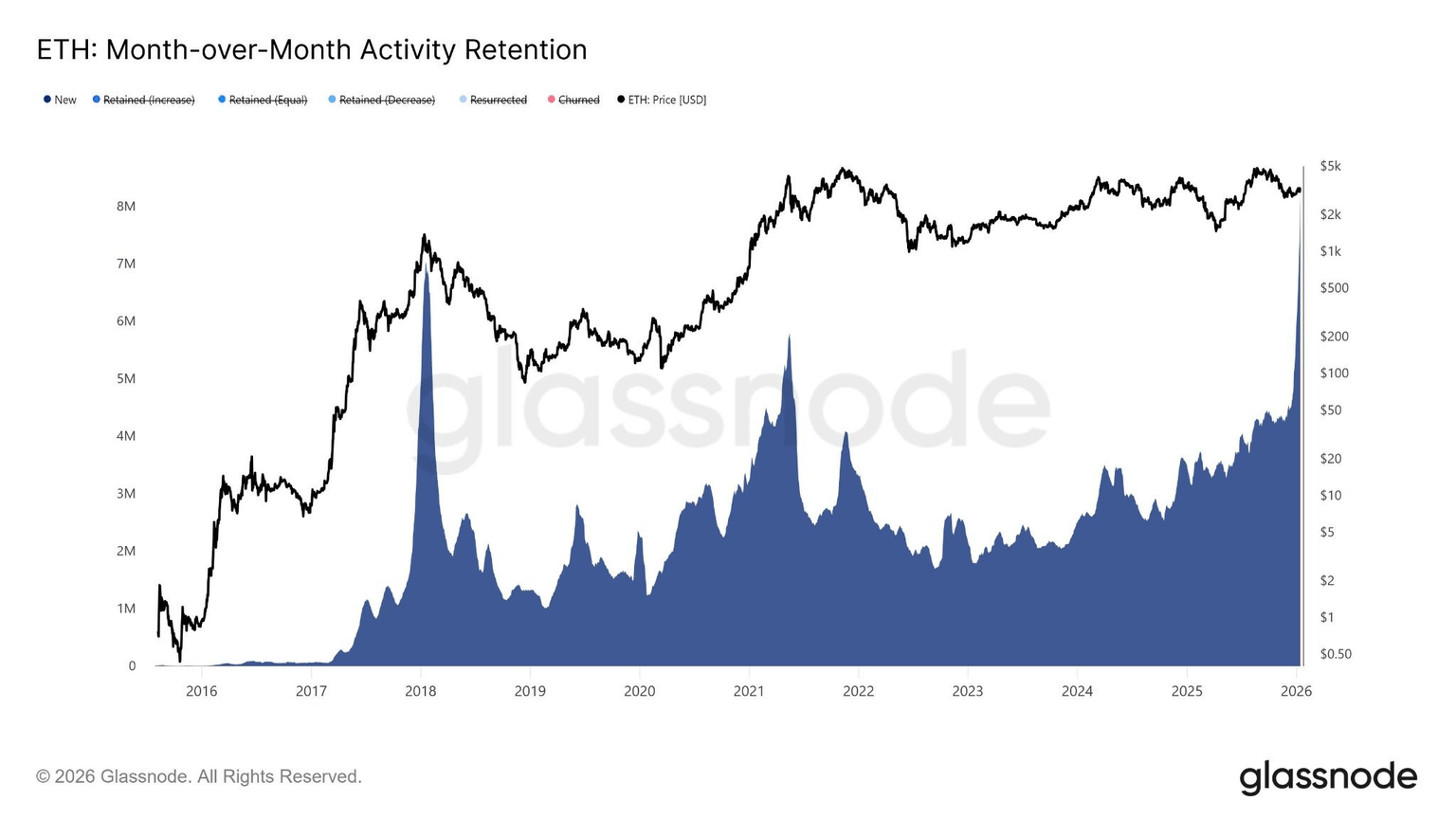
Ethereum activity retention spikes to all-time high. Source: Glassnode
Daily Transactions on Ethereum Reach New Heights
In addition to user growth, the Ethereum network has witnessed a remarkable rise in daily transactions. Data from Etherscan indicates that the number of active addresses has more than doubled over the past year, jumping from around 410,000 to over 1 million by mid-January. Recently, Ethereum’s daily transactions soared to an all-time high of 2.8 million, marking a staggering 125% increase compared to the same period last year.
This increase in transaction volume can largely be attributed to the explosion of stablecoin usage on the Ethereum network and a parallel decline in transaction fees. An analysis from the macroeconomics outlet Milk Road noted that Ethereum’s strategy of pushing execution to Layer 2 solutions while maintaining secure settlement on Layer 1 is paying off, demonstrating what scalable financial infrastructure should look like.
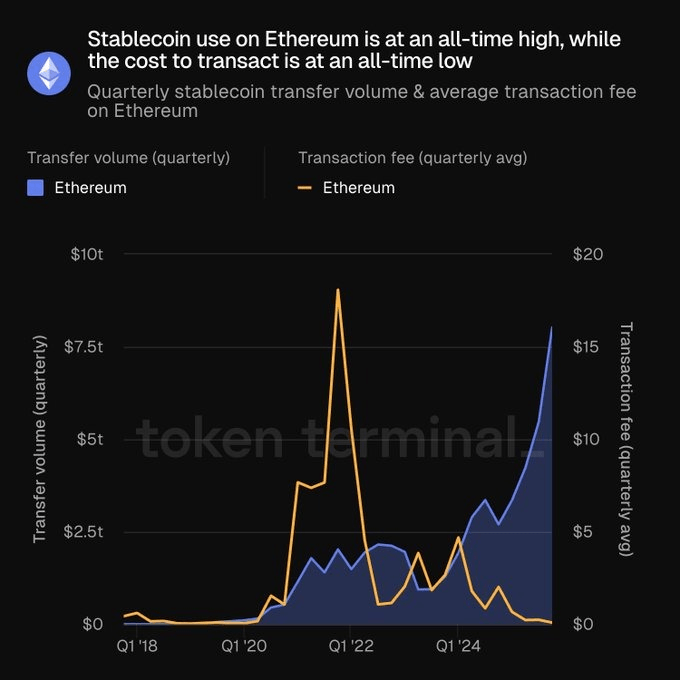
Stablecoin usage on Ethereum is at an all-time high amid record-low fees. Source: Token Terminal
Positive Sentiment Surrounds Ethereum
The overall sentiment surrounding Ethereum has been increasingly optimistic. Justin d’Anethan, the head of research at Arctic Digital, emphasized that there are many reasons to feel positive about Ethereum’s future. He pointed out that recent trading indicators in the oversold territory have begun to show upward momentum, suggesting potential for significant price increases. This surge is fueled by renewed capital inflows into ETFs, stablecoins, and native crypto protocols.
Nick Ruck, director of LVRG Research, shared insights on Ethereum’s network fundamentals. He noted that daily transactions have climbed past 2 million, with staking reaching nearly 36 million ETH. These strong on-chain metrics, alongside persistent ETF inflows and overall optimism in the ecosystem, position Ethereum (ETH) for a possible breakout above its current resistance levels. This situation is further amplified by the tightening liquidity corresponding with heightened institutional participation and the recent upgrades that have boosted transaction speed while lowering gas fees.
Market analysts are buzzing about the potential for ETH to break out of its current price range. Michaël van de Poppe, founder of MN Fund, highlighted that significant price compression is likely to lead to a breakout in the coming weeks. Ether prices recently hit a two-month high of $3,400, although they have slightly retreated to around $3,300 in early trading on Friday.